
Jul. 11, 2022
Color rendering is a difficult aspect of lighting because it is not as immediately visible as color temperature. So how do you know what the actual difference between 80 CRI, 90 CRI, 95 CRI or higher is, and whether it matters?
The ultimate answer is that it depends on your application and how sensitive you or the occupants of the space are to the quality of light. Below, we will discuss some general criteria and applications to understand when a specific level of CRI can be used and the differences between 80, 90 and 95 CRI.
CRI is how accurately artificial light shows the color of objects (or people) beneath it. CRI uses a numerical scale from 1 to 100 to evaluate the color reproduction and color accuracy of objects under different lights compared to how those objects would look under incandescent light or natural sunlight.
Technically, incandescent lamps and sunlight are considered "blackbody emitters" and have a perfect CRI score of 100 ...... so they are the benchmark. The higher the CRI value, the better the color rendering of the lamp or bulb. In general, a CRI of 80 or higher is considered good, while a CRI of 90 or higher is considered excellent. Think of CRI numbers as test scores: a B in the 80s and an A in the 90s.

High CRI96 COB LED Array 600W
80 CRI is often considered the baseline CRI level for LEDs and fluorescent lamps. This is definitely an acceptable level of color quality where the most visible colors stand out and look good enough for everyday tasks. Most manufacturers have made 80 CRI the standard or base light quality product, and you may find that most lights sold at your local hardware store have a CRI of 80.
With a light source with an 80 CRI rating, you may find that subtle colors, especially those with a deep red component, may appear unnatural. You may be surprised to find that many colors that do not immediately appear "red" are affected by their red content. Some examples include skin tones and wooden furniture or floors. For example, if you enjoy hosting dinner parties, your guests may leave with a slightly diminished impression of the visual and aesthetic aspects of the food or decor, even on a subconscious level.
Most 80 CRI sources have an R9 value of approximately 0 (more information on R9 values below).
High CRI96 COB 300W for Studio Lighting
Many manufacturers will offer 90 CRI products as their "premium" products. the difference between 80 and 90 CRI is very noticeable and will immediately provide a very good color clarity improvement. For most residential installations, 90 CRI is perfect for the areas where you plan to spend the most time: bedrooms, living rooms and dining tables.
For example, most items, including fresh produce, meats, wood furniture and skin tones, look mostly normal and you won't find anything offensive or strange.
Getian PST300W high CRI90 Ra95 Ra96 COB, 24V, with super small LES 10.45mm, copper core board, Osram vertical chips applied. This COB Chip is optimized for narrow beam angle applications, like projectors, spots, logo projectors, stage lights, follow spots in film lighting, studio lighting and theater lighting.
Most 90 CRI sources have an R9 value in the 50s.
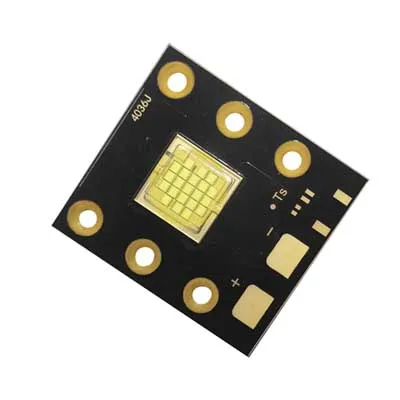
High CRI90 24V 300W COB LED Chip
Once we reach 95 CRI, color rendering reaches a new level of accuracy. For those whose profession or hobby relies on accurate color perception, the difference between 90 and 95 CRI is often an important and overlooked benefit. Visual artists, for example, often find the color accuracy of the 95 CRI critical to distinguishing subtle differences in hue or tone in their work. In short, at the right color temperature, objects under 95 CRI look nearly identical to their appearance in natural light.
For residential applications, 95 CRI can bring additional benefits to the overall aesthetic. While it may be difficult for the average person to distinguish between 90 CRI and 95 CRI, the subtle differences in color and appearance help to enhance the cohesiveness of interior spaces. For the average person, they may not even know that lighting is an integral part of a space, but for interior designers, 95 CRI is the key to ensuring that their carefully selected furniture and color schemes look perfect.
PST400W High CRI96 COB, with high R9 R12 values, with super small LES 12.41mm specialty white LED delivers high brightness. This COB LED is widely applied to led stage lights, entertainment lights, narrow beamed spot lights, and where high cri lighting required like studio lighting, film lighting and broadcasting.
Most 95 CRI light sources have an R9 value in the 90s.

400W High CRI96 COB for Broadcasting
We've already mentioned the R9 values for each of the 80, 90 and 95 CRI color quality levels. There is no fixed formula, but there is a strong correlation between CRI values and R9 values, with 80, 90 and 95 CRI roughly corresponding to 25, 50 and 90, respectively.
While CRI is a general score that describes the accuracy of a light source, R9 is a specific score that focuses specifically on its ability to render reds. As we mentioned above, red is the most common color in a variety of objects and materials, so using R9 as a complement to CRI is a good way to evaluate light sources.
Some of the most significant differences between 50 and 90 R9 values can be found in skin tones. For example, if you are fully engaged in photography, you may notice the difference immediately.
For more information about the High CRI COB LED, welcome to contact us at +86 75 2960 6860 or write to us at info@getiangroup.com. We will be happy to help you out!


